





Every fleet manager and workshop owner knows the feeling. A vehicle comes off the road unexpectedly, and suddenly you’re not just dealing with a repair, you’re dealing with a cascade of costs, disruptions, and pressures that ripple out far beyond the workshop floor.
Unplanned vehicle downtime is one of the most significant and consistently underestimated costs in commercial transport. And in an industry operating on notoriously tight margins — the Road Haulage Association has reported average pre-tax profit margins in UK haulage as low as 2% in recent years — the financial impact of a vehicle sitting idle can be devastating. Getting vehicles diagnosed accurately and back on the road quickly is not just operationally important. It is financially critical.
In this article, we break down the true cost of commercial vehicle downtime, examine why it is getting harder to absorb, and explore how investing in the right diagnostic tools and support can protect your operation.
What Does Commercial Vehicle Downtime Actually Cost?
When fleet managers think about downtime costs, the repair bill tends to dominate the conversation. But the repair itself is often only a fraction of the total financial impact. Industry research consistently identifies a range of direct and indirect costs that accumulate every day a vehicle is off the road.
Lost revenue is the most immediate and obvious consequence. A vehicle that is not moving is not earning. For a haulage operator, a truck sitting in a workshop bay is generating zero income whilst fixed costs — finance payments, insurance, road tax — continue regardless.
Idle driver wages add to the burden. If a driver is stood down because their vehicle is unavailable, you are paying a wage for no productive output. In many operations, drivers may need to be redeployed or, worse, sent home, disrupting scheduling and potentially triggering contractual issues.
Replacement hire costs can be significant. When an operator cannot afford to leave a customer short, the cost of a hire vehicle to cover the gap — at short notice rates — can quickly dwarf the original repair bill.
Knock-on delivery failures carry their own costs. Late or missed deliveries damage customer relationships, can trigger contractual penalty clauses, and in competitive markets, risk losing the account altogether. Reputational damage is difficult to quantify but very real.
Administrative disruption is frequently overlooked. Every unplanned breakdown triggers a chain of reactive activity across your back office — rescheduling, customer communications, sourcing replacement transport, coordinating recovery — all of which consumes staff time and management attention that could be directed elsewhere.
Taken together, these costs paint a picture that is considerably bleaker than the invoice from the workshop. Analysis from multiple industry sources consistently places the total cost of unplanned downtime for a commercial vehicle at many hundreds of pounds per day — and for larger HGVs operating on time-critical routes, the figure can be significantly higher still.
The UK Context: Why Downtime Costs Are Rising
The financial impact of vehicle downtime is not static. Several structural pressures in the UK commercial vehicle sector are making it more expensive and more consequential than ever before.
Tighter margins. UK haulage and logistics businesses are operating under intense cost pressure. Fuel, labour, and regulatory compliance costs have all risen sharply in recent years. According to the Road Haulage Association, operating costs for a typical 44-tonne HGV increased by approximately 10% in 2024 alone, excluding fuel. In this environment, there is simply less financial buffer to absorb the shock of an unplanned vehicle failure.
Ageing fleets. Economic uncertainty in recent years has led many operators to extend vehicle replacement cycles. The Society of Motor Manufacturers and Traders (SMMT) has noted that the average age of HGVs on UK roads is climbing — and older vehicles operating at high mileage are statistically more susceptible to mechanical failures. The potential for unexpected breakdowns increases as vehicles age, making effective diagnostic capability more important, not less.
Technician shortages. The UK commercial vehicle sector is grappling with a well-documented shortage of qualified heavy vehicle technicians. The Institute of the Motor Industry (IMI) has repeatedly warned of a chronic skills gap — one that is particularly acute for specialists trained on modern diagnostics, ADAS systems, and complex multi-brand electronics. When technicians are scarce, time spent chasing a fault that should have been identified in minutes becomes a serious operational liability.
More complex vehicles. Modern commercial vehicles — trucks, buses, coaches, agricultural machinery — are sophisticated electronic systems. A single vehicle may contain dozens of interdependent ECUs controlling everything from engine management and emissions systems to braking, suspension, and driver assistance functions. Diagnosing a fault on a modern HGV is a fundamentally different task from diagnosing one on its predecessor from a decade ago. Without the right diagnostic tools, identifying the root cause of a problem can be a time-consuming, expensive process of elimination.
Reactive vs Preventive: The Maintenance Cost Multiplier
One of the most important financial distinctions in fleet maintenance is between reactive and preventive approaches — and the numbers are stark.
Reactive maintenance, where faults are only addressed once a vehicle has broken down, is almost always the more expensive route. Studies across the maintenance industry consistently find that reactive repairs cost significantly more than the same work carried out preventively — some research suggests reactive maintenance can cost between three and nine times more than a planned intervention, once all associated costs including downtime, emergency labour, and parts sourcing at short notice are factored in.
The logic is straightforward. A planned repair, identified during a routine inspection or scheduled service, can be scheduled at a convenient time, with the right parts in stock, during normal working hours. An emergency repair following a breakdown requires immediate parts sourcing, potentially at premium cost, often outside normal working hours, with a recovery vehicle already on the scene and the vehicle off-road in an inconvenient location.
Preventive maintenance — regular, disciplined inspection and servicing combined with early fault detection — is the single most effective strategy for reducing downtime costs. And the foundation of an effective preventive maintenance programme for modern commercial vehicles is reliable, accurate diagnostic capability.
The Diagnostic Difference: Why the Right Tool Matters
The ability to identify a fault quickly, accurately, and completely is what separates a workshop that controls its downtime costs from one that is constantly reacting to them.
Consider a common scenario: a truck arrives at the workshop with a warning light active. Without a capable diagnostic tool, the technician is working with limited information — relying on experience, manual inspection, and time-consuming trial and error to pinpoint the cause. Hours can pass. Parts may be ordered unnecessarily. The vehicle stays off the road.
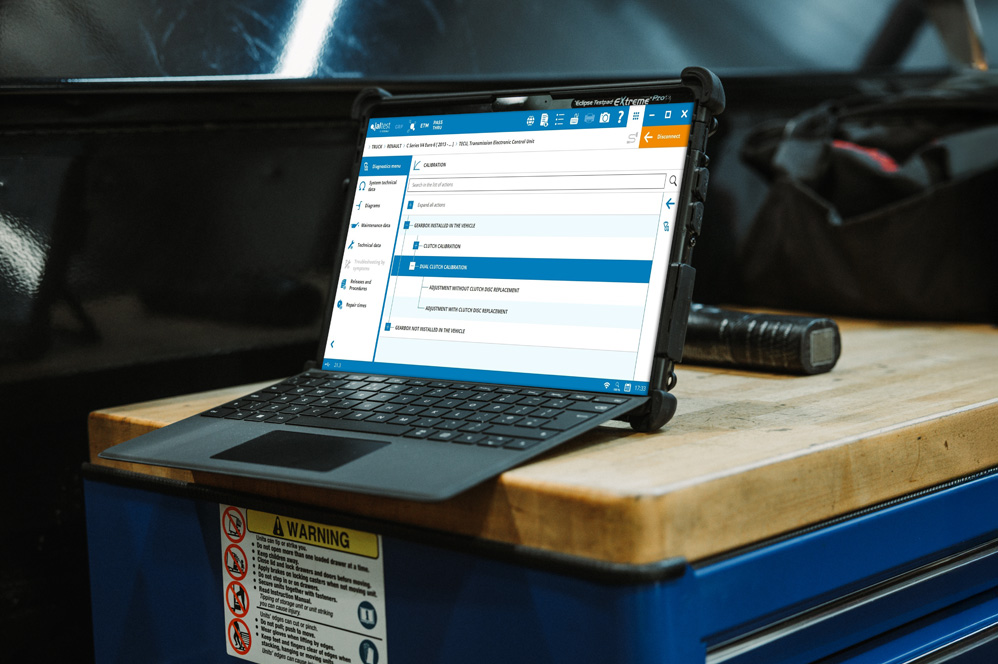
With a comprehensive multi-brand diagnostic tool, the technician can interrogate every relevant system on the vehicle within minutes — reading live data, pulling fault codes, accessing wiring diagrams, and following guided diagnostic routines that lead directly to the root cause. A job that might otherwise have taken half a day is completed in an hour. The vehicle goes back to work.
This is the practical, day-to-day value of investing in professional diagnostic equipment. Not just the convenience of a single tool covering multiple makes and models — though that is significant in itself — but the cumulative time and money saved across every repair, every inspection, and every service event over the life of that tool.
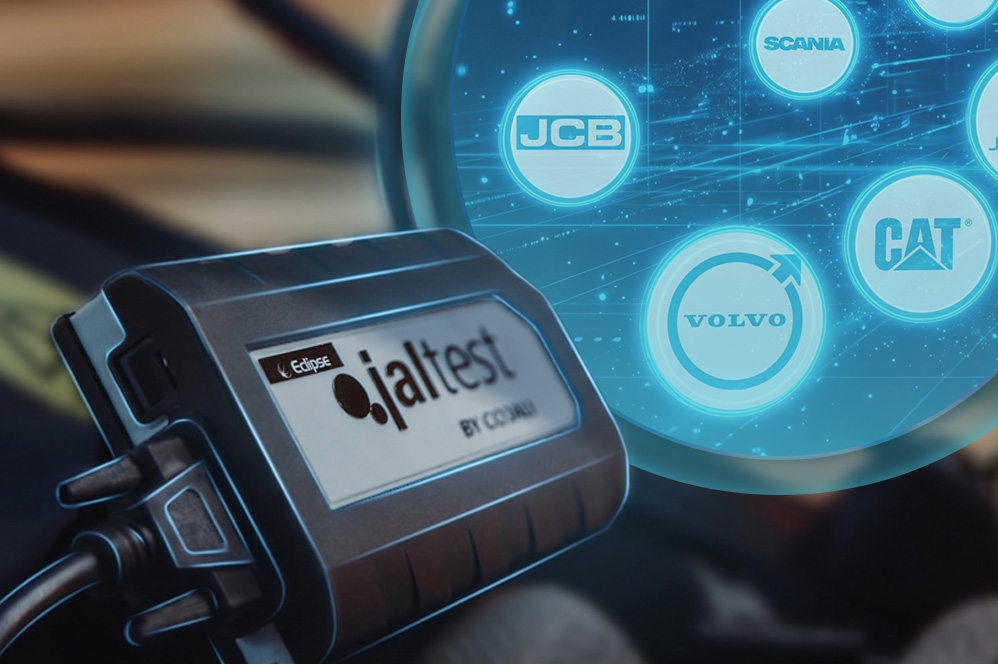
At Eclipse, we supply Jaltest Diagnostics — the leading multi-brand commercial vehicle diagnostic solution in the UK. Jaltest covers more than 214 brands and nearly 6,000 models across trucks, trailers, buses, coaches, agricultural vehicles, off-highway machinery, material handling equipment, and marine vessels. It gives workshops and fleet maintenance teams the kind of diagnostic depth that was once the exclusive preserve of franchised main dealers, from a single, unified platform.
As our customers consistently tell us, the tool does not just save time on individual repairs — it reduces the overall frequency of extended VOR events by enabling faster, first-time-accurate diagnosis.
The Cost of Getting It Wrong: Misdiagnosis and Unnecessary Parts
There is another dimension to the diagnostic cost equation that is worth addressing directly: the cost of misdiagnosis.
In a workshop without adequate diagnostic capability, faults are sometimes identified incorrectly. Parts are replaced that turn out not to be the cause of the problem. The vehicle is returned to the customer still showing a fault. It comes back. More time is lost. More parts are ordered. The customer’s confidence — and patience — erodes.
Unnecessary parts replacement is a significant and underappreciated source of waste in commercial vehicle maintenance. A single incorrectly identified component fault can result in hundreds of pounds of parts expenditure that achieves nothing, plus the labour time to fit and then remove and return those parts, plus the extended VOR time throughout.
Jaltest’s guided diagnostic functionality is specifically designed to minimise this risk. Rather than simply presenting a fault code and leaving the technician to interpret it, Jaltest walks through a structured diagnostic process, cross-referencing live sensor data, checking related systems, and flagging the most likely root causes based on the full picture of what the vehicle’s electronics are reporting. The result is faster, more accurate diagnosis — and a demonstrable reduction in unnecessary parts spend.
Downtime and the Fleet Manager’s Perspective
For fleet managers — particularly those running mixed-brand fleets — the downtime equation has an additional layer of complexity. When you operate vehicles from multiple manufacturers, the traditional approach of using manufacturer-specific diagnostic tools means investing in multiple systems, training technicians on multiple platforms, and managing multiple support relationships.
The inefficiency of this approach compounds every time a fault needs to be diagnosed. Time spent switching between tools, cross-referencing different interfaces, or waiting for a manufacturer-specific tool to be available from another part of the workshop is time the vehicle spends off the road.
A multi-brand diagnostic platform like Jaltest resolves this directly. One tool. One interface. Coverage across every brand in the fleet. Technicians develop deep familiarity with a single system, making them faster and more confident in their diagnostic work. Fleet managers gain consistent, comparable data across all vehicles, making it easier to identify patterns, plan preventive maintenance, and manage total cost of ownership across the whole fleet.
As one Eclipse customer put it: “Jaltest saves us on dealer callout fees and having to buy multiple different types of diagnostic equipment. This saves downtime by diagnosing faults first time and gets machines back out on site working quicker.”
Technical Support: The Safety Net That Speeds Recovery
Even the best diagnostic tool is most effective when it is backed by strong technical support. Modern commercial vehicles are complex enough that even experienced technicians will occasionally encounter a fault that requires specialist input — a system behaviour they haven’t seen before, an interaction between ECUs that isn’t immediately obvious, or a repair procedure that requires detailed technical guidance.
At Eclipse, our UK-based technical support team is available to assist with exactly these situations. Our vehicle support technicians can access the customer’s Jaltest Testpad remotely — with the customer’s agreement — providing real-time guidance as if sitting alongside the technician in the workshop. The practical effect is a significant reduction in the time spent stuck on a difficult fault, and a faster return to service for the vehicle.
For fleet operators, this kind of support is not a peripheral benefit — it is a core part of the value of the Eclipse partnership. When a vehicle is off the road and you need answers, having immediate access to a team of specialists who know the tool and know the vehicles is genuinely invaluable.
Building a Downtime Reduction Strategy
Reducing vehicle downtime is not a single intervention — it is a strategy built from several complementary elements. Here is how the most effective fleet maintenance operations approach it.
Invest in capable diagnostics. This is the foundation. Without accurate, fast fault identification, every other maintenance activity is compromised. The right diagnostic tool pays for itself many times over in reduced repair times, fewer unnecessary parts replacements, and fewer extended VOR events.
Prioritise preventive maintenance. Use your diagnostic capability proactively, not just reactively. Regular health checks — scanning all systems for developing faults before they cause a breakdown — allow problems to be addressed at a time and place of your choosing, at planned-maintenance cost rather than emergency-repair cost.
Train your technicians. Diagnostic tools are only as effective as the people using them. Eclipse offers a range of Jaltest training courses — including on-site, remote, and classroom options — ensuring that your team can extract full value from the diagnostic capability available to them. A well-trained technician with a great tool will always outperform an under-trained technician with the same equipment.
Keep software current. Jaltest releases three software updates per year, each expanding vehicle coverage, adding new repair functions, and incorporating the latest manufacturer data. Staying current ensures your diagnostic capability keeps pace with the vehicles in your fleet — including newer models and the latest ECU generations.
Use data to identify patterns. Over time, your diagnostic and repair records tell a story. Which vehicles are generating the most fault codes? Which systems are failing most frequently? Patterns that are invisible when you’re reacting to individual breakdowns become clear when you review your data systematically — and they point directly to the preventive interventions that will have the greatest impact on your overall downtime costs.
The Return on Investment of Diagnostic Equipment
The investment in professional diagnostic equipment can seem significant — but it is important to view it in the context of the costs it prevents, rather than as a standalone expense.
Consider the cumulative saving from a single warranty dealer callout avoided. A main dealer diagnostic visit for a commercial vehicle, including callout fees and the time lost waiting for an appointment, can represent a substantial cost — one that a capable in-house or independent workshop diagnostic tool eliminates entirely. Customers of Eclipse frequently cite the elimination of unnecessary dealer callouts as one of the most immediate and tangible financial benefits of their Jaltest investment.
Add to this the saving from faster repairs, reduced VOR time, fewer unnecessary parts replacements, and the avoidance of even a small number of extended breakdown events per year — and the return on investment case for a quality multi-brand diagnostic tool becomes straightforward.
If you would like to understand how Jaltest Diagnostics could reduce downtime costs in your specific operation, our team is happy to talk through your fleet composition and requirements.
Contact Eclipse today or call us on 03454 666 699 — and take the first step towards making downtime the exception rather than the rule.
Explore the full range of Jaltest diagnostic packages and accessories available from Eclipse at our products page, or find out more about our technical support and training services.