





And How Jaltest Helps You Stay Ahead
You might assume that winter is the most punishing time of year for trucks and HGVs — and you’d have a point. But spring and summer bring their own set of challenges that catch plenty of fleet managers and workshop technicians off-guard.
The truth is the change in season doesn’t give your vehicles an easy ride. Rising temperatures, longer operating hours, dustier road conditions, and vehicles that have taken a battering over the colder months all add up to a very specific set of diagnostic headaches. And if you’re not prepared for them, you’ll be dealing with more downtime — and more cost — than you bargained for.
In this article, we run through the most common truck and HGV faults that show up in spring and summer, and explain how Jaltest CV — the UK’s leading multi-brand truck diagnostics solution — can help your workshop get to the root cause quickly and confidently.
(Already read our autumn/winter faults guide? If you haven’t, check it out here.)
-
Engine Overheating
This is probably the most well-known summer truck issue — and with good reason. As ambient temperatures rise, the demands on a truck’s cooling system increase significantly. What the cooling system could manage comfortably in February may well be pushed to its limits by July.
The most common culprits are fairly predictable: low coolant levels, a malfunctioning thermostat, a blocked or degraded radiator, a faulty water pump, or a failing fan clutch. Any one of these can cause coolant temperatures to climb into dangerous territory, risking warped cylinder heads, cracked engine blocks, and costly failures.
The challenge for technicians is that the symptoms — warning lights, reduced power, visible steam — often appear after the damage has already started. The key is catching the fault early, before it becomes catastrophic.
How Jaltest helps: Jaltest allows technicians to monitor coolant temperatures and engine load data in real time using its live data display and graphing functions. Rather than waiting for a fault code to appear, you can track thermal performance under operating conditions and identify a deteriorating cooling system before it causes a breakdown. Jaltest’s guided fault diagnosis then walks technicians through a step-by-step troubleshooting path — covering everything from thermostat checks to water pump integrity — so no time is wasted chasing the wrong component.
-
DPF (Diesel Particulate Filter) Problems
DPF faults are a year-round issue in commercial vehicles, but they become particularly prevalent in spring and summer for an interesting reason: vehicles that have been doing a lot of short, stop-start trips over winter — deliveries in urban areas, local distribution runs — will often arrive in warmer weather with a heavily loaded DPF that never got the opportunity to fully regenerate.
A DPF regenerates (burns off trapped soot) when the exhaust reaches the right temperature, which typically happens during longer runs at higher speeds. If a truck has spent months crawling through town, that regeneration may not have happened. Come spring, with longer haul routes or increased mileage, the DPF fault light appears — often at the worst possible moment.
Additionally, higher ambient temperatures can affect the delicate balance of the aftertreatment system. If there are underlying issues with injectors, EGR systems, or temperature sensors, these can interact with summer operating conditions to trigger or worsen DPF-related faults.
How Jaltest helps: Jaltest CV provides comprehensive DPF diagnostics, including the ability to check soot load levels, initiate forced DPF regenerations, and read and clear aftertreatment-related fault codes. Its Expert Mode allows advanced users to carry out DPF replacement procedures and recalibrate relevant sensors — functions that previously required a main dealer visit. This keeps your vehicles moving and avoids the cost and delay of a dealer callout.
Explore Jaltest CV’s full truck diagnostics capabilities here.
-
Cooling System Leaks (Identified Post-Winter)
Winter is brutal on rubber — hoses, seals, and gaskets all experience contraction and expansion with temperature fluctuations, and by spring, some of them will have taken enough of a beating to start leaking. The problem is that these leaks can be subtle at first. A slow weep from a coolant hose joint or a minor radiator leak might not trigger an immediate warning, but left unchecked, it will gradually cause coolant levels to drop — leading back to the overheating issues covered above.
Fleet managers and technicians doing spring inspections should pay particular attention to the cooling system after a UK winter. The freeze-thaw cycles alone can stress components significantly.
How Jaltest helps: While Jaltest won’t detect a physical hose leak that hasn’t yet affected system performance, it will flag early signs of coolant system degradation through live data monitoring. Tracking coolant temperature patterns, checking the integrity of temperature sensor readings, and identifying any fault codes related to the cooling circuit can all be done quickly and accurately with Jaltest — making it a valuable tool for spring fleet health checks.
-
Air Conditioning (HVAC) System Faults
This one often gets overlooked in a commercial vehicle context — but try telling a driver sitting in a cab on a 30°C day that the air con is “not really a priority.”
Air conditioning systems that haven’t been used throughout winter often develop faults when they’re called back into service in late spring. Refrigerant leaks, compressor failures, and sensor faults are all common, and they’re also more likely to be flagged on a pre-summer inspection if you know what to look for.
Beyond driver comfort, it’s worth noting that cab temperature has a real impact on driver alertness and safety — particularly on long-haul routes. Keeping HVAC systems in good working order isn’t just about comfort; it’s a safety and operational issue.
How Jaltest helps: Jaltest’s diagnostic capabilities extend to HVAC systems across a wide range of commercial vehicle brands. Technicians can read fault codes from the HVAC control unit, check sensor readings, and perform component activations to test compressor function and refrigerant circuits — making it far quicker to pinpoint where the fault lies.
-
Tyre-Related Faults and Sensor Issues
Higher road surface temperatures in summer cause tyre pressures to increase. For a truck that’s correctly inflated in cooler conditions, this can push pressures above the recommended range on a hot summer’s day. Overinflated tyres are more susceptible to blowouts, and this is a well-documented cause of commercial vehicle incidents in warmer weather.
At the same time, TPMS (Tyre Pressure Monitoring System) sensors can throw false alarms or become faulty — particularly in older vehicles where the sensors haven’t been replaced for several years. A sensor fault that was dormant in winter can become an active fault code when the system is working harder in summer heat.
How Jaltest helps: The Jaltest platform now includes integration with Jaltest TPMS functionality — allowing workshops to communicate with TPMS devices directly through the software and generate full tyre pressure status reports. This means TPMS fault codes can be properly diagnosed and resolved, rather than simply cleared and ignored.
-
Electrical System Stress and Sensor Faults
While battery failure is primarily a cold-weather issue, summer heat creates its own problems for truck electrical systems. High temperatures accelerate the degradation of wiring insulation, can cause intermittent sensor faults, and place additional load on the alternator — particularly when air conditioning, refrigeration units, and other cab electronics are all running simultaneously.
Faulty or heat-stressed sensors (MAF, MAP, temperature sensors, NOx sensors) can generate misleading fault codes that send technicians down the wrong diagnostic path — spending time and money replacing parts that aren’t actually at fault.
How Jaltest helps: Jaltest’s ability to display and graph live data from individual sensors in real time is particularly valuable here. Rather than relying on stored fault codes alone, technicians can observe sensor behaviour under actual operating conditions — identifying a sensor that’s reading erratically under heat load versus one with a genuine, consistent fault. This dramatically reduces the risk of misdiagnosis.
-
EGR (Exhaust Gas Recirculation) System Issues
EGR systems are a frequent source of headaches in commercial vehicles at any time of year, but the combination of warmer temperatures and increased summer mileage tends to bring these issues to the surface. Carbon buildup in EGR valves and passages is a gradual process, but it often reaches a tipping point during periods of heavier use — resulting in reduced engine performance, increased fuel consumption, and fault codes that can trigger engine derating.
EGR cooler failures are also more likely in summer, when the thermal stresses on the cooler are at their highest.
How Jaltest helps: Jaltest provides detailed EGR-related fault code descriptions, live data monitoring for EGR valve position and flow rates, and component activation tests — so technicians can quickly establish whether the valve is actually operating correctly or whether the fault lies elsewhere in the system. The guided troubleshooting feature then links directly to the recommended repair actions.
Spring is the Perfect Time for a Diagnostic Health Check
One of the most valuable things you can do for your fleet at this time of year is a proactive spring diagnostic sweep. Rather than waiting for a fault to take a vehicle off the road — at exactly the point in the year when demand is often highest — a structured diagnostic check with Jaltest CV can identify issues before they become failures.
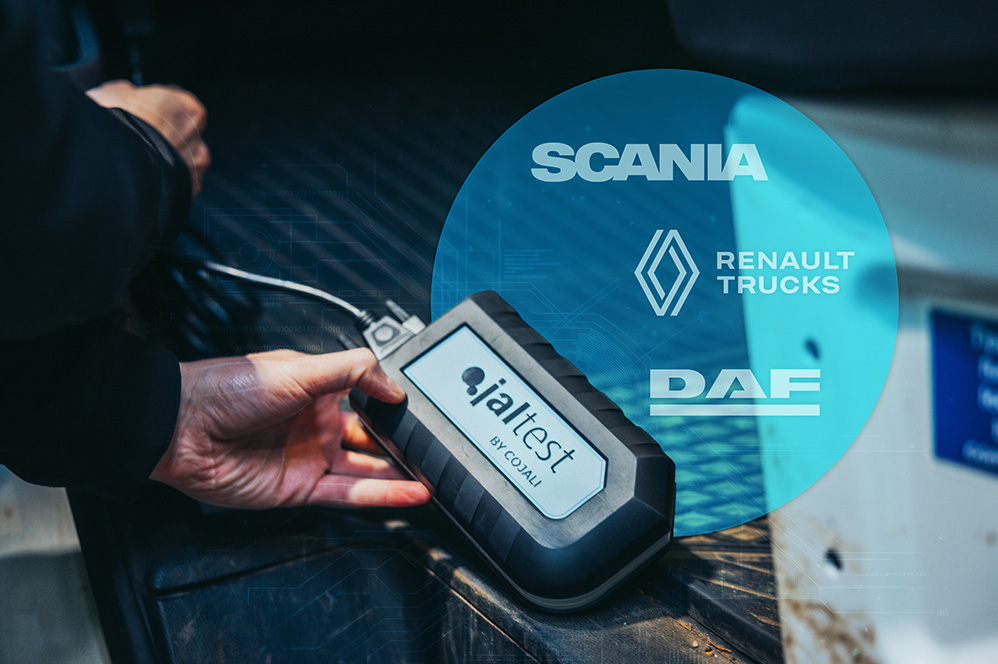
Think of it like a pre-season service for your fleet. And because Jaltest covers over 214 brands and nearly 6,000 models, it doesn’t matter whether your fleet is running DAF, Scania, Volvo, MAN, Mercedes-Benz, Iveco, or a mix of everything — one tool covers them all.
Not sure where to start? Our Jaltest training courses help technicians get the most from the software — whether you’re new to Jaltest or looking to take your diagnostic skills to the next level.
How Jaltest CV Supports Year-Round Diagnostics
It’s worth stepping back for a moment and explaining what makes Jaltest CV the tool of choice for so many UK workshops and fleet operators.
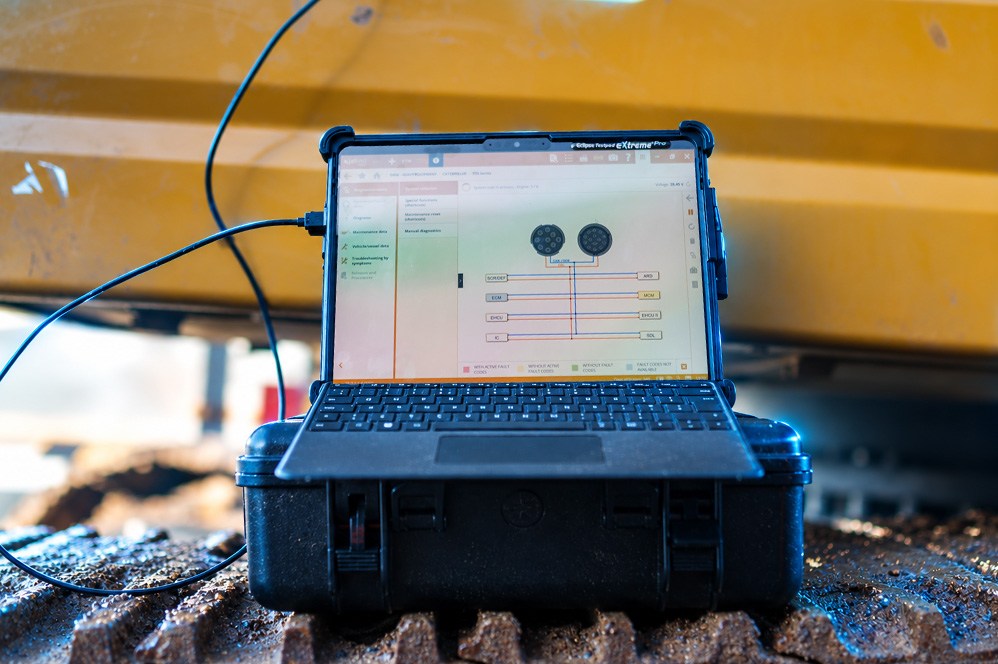
The headline features are well known — dealer-level diagnostics for all major truck, trailer, bus, coach, and LCV brands; interactive wiring diagrams; component location guides; SMART guided fault diagnosis. But the real value, particularly for seasonal fault patterns, lies in the combination of live data monitoring, guided troubleshooting, and Expert Mode functionality.
When a HGV rolls into your workshop with a summer-related fault, Jaltest doesn’t just tell you that something’s wrong — it helps you understand why, guides you through the diagnosis, and links you directly to the repair actions. That’s the difference between a tool that reads codes and a tool that actually helps you fix vehicles faster.
And because Jaltest software is updated three times a year — with new brands, models, and diagnostic capabilities added with each release — you can be confident that your tool stays current as fleets evolve.
Ready to Upgrade Your Diagnostics?
Whether you’re a fleet manager looking to reduce vehicle off-road time this summer, or a workshop owner who wants to handle more faults in-house without dealer callout fees, Jaltest CV from Eclipse is the answer.
Get in touch with the Eclipse team to discuss which package is right for you — or explore the full range of Jaltest diagnostics products here.
We’re based in Derbyshire and support customers across the UK and Ireland, with a dedicated technical support team on hand whenever you need us. Because as we always say — what good is a diagnostic tool if you can’t use it?
Looking for more insights? Read our related articles:
- Common Truck Faults During Autumn/Winter
- Diagnosing Common Truck Faults
- How to Choose the Best Vehicle Diagnostic Tool
- Jaltest Software: What It Does and How It Works