





 Every workshop makes mistakes. That is not a criticism. It is simply the reality of a fast-paced environment where technicians are under constant pressure to diagnose faults quickly, get vehicles back on the road, and move on to the next job.
But there is a significant difference between a minor oversight and a misdiagnosis. In commercial vehicle workshops, the consequences of getting a diagnosis wrong can ripple out in ways that are far more damaging than most people realise.
This article looks honestly at what misdiagnosis actually costs. Not just in parts and labour, but in reputation, compliance risk, and customer relationships. It also explores why it happens and what workshops can do to reduce the risk.
What Is Misdiagnosis in a Workshop Context?
Misdiagnosis does not always mean a catastrophic error. More often, it is a series of small missteps that lead a technician down the wrong path.
Common examples include:
- Replacing a component based on a fault code without confirming the root cause
- Clearing codes and returning a vehicle to service without identifying why they appeared
- Assuming a fault is a known issue on that make or model without verifying live data
- Missing a secondary fault masked by a more obvious primary code
- Using a generic or underpowered diagnostic tool that does not read all available ECU data
Each of these scenarios is surprisingly common. And each one carries a cost.
The Financial Cost: It Goes Beyond the Part
The most obvious financial impact of misdiagnosis is the cost of an unnecessary repair. A part that did not need replacing, labour time that went nowhere, and the need to rebook the vehicle and start again.
But that is only the beginning. Consider the knock-on effects:
- The vehicle returns to the workshop, now carrying an even longer downtime bill
- Labour time is spent twice or more on what should have been a single job
- Parts may not be returnable, especially if they have been fitted and removed
- A repeat visit ties up a ramp that could be generating revenue elsewhere
- If the fault led to a breakdown on the road, recovery costs are added to the total
Unplanned commercial vehicle downtime is already one of the most significant costs facing UK fleets, factoring in lost revenue, driver idle time, missed delivery windows, and penalty clauses. When misdiagnosis is the cause of a repeat breakdown, those costs can multiply quickly.
The Reputational Cost: Trust Is Hard to Rebuild
In the commercial vehicle sector, word travels fast. Fleet managers talk. Owner-operators share experiences. A workshop that returns a vehicle with the same fault it came in with, or with a new fault introduced during the repair, will lose that customer. Possibly permanently.
The reputational damage from misdiagnosis is rarely immediate and rarely loudly announced. It tends to show up as:
- A customer who simply stops booking vehicles in
- A fleet contract that quietly moves to a competitor at renewal
- A negative review online, or a conversation between fleet managers that you never hear about
In a market where customer acquisition is expensive and retention is everything, this kind of damage is genuinely serious.
The Compliance Risk: A Fault Missed Can Have Legal Consequences
Commercial vehicles are subject to strict roadworthiness requirements. A fault that is misdiagnosed, or left unresolved because the root cause was not properly identified, can lead to a vehicle being operated in an unroadworthy condition.
That creates legal exposure for both the operator and the workshop. DVSA prohibition notices, failed operator licence renewals, and in serious cases, liability for accidents or incidents caused by an unresolved mechanical or electronic fault are all genuine risks.
This risk is particularly acute for safety-critical systems: braking, steering, ADAS, emissions systems, and lighting. Many of these systems are now controlled by interconnected ECUs. A misread fault on one system can have consequences across others.
Why Does Misdiagnosis Happen?
Understanding why misdiagnosis occurs is more useful than simply acknowledging that it does. The causes are usually one of the following:
- Inadequate diagnostic tooling
Generic or entry-level diagnostic tools often read only a limited subset of available fault codes. They may not have access to all ECUs on a vehicle, or they may lack the live data depth needed to distinguish between a root cause and a secondary fault. This is one of the most common and most preventable causes of misdiagnosis in workshops.
- Over-reliance on fault codes alone
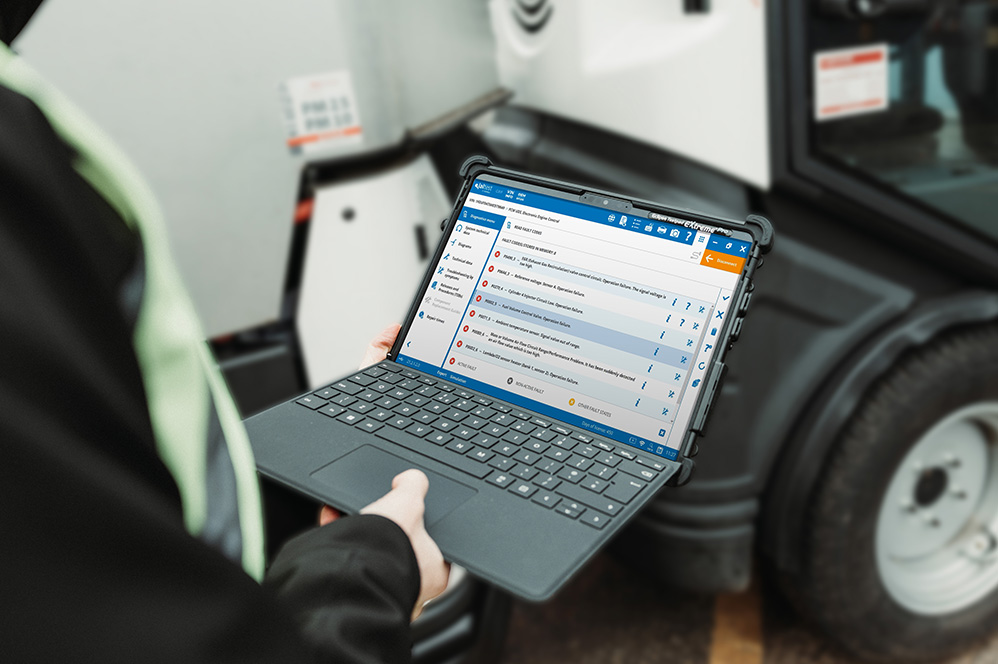
A fault code is a starting point, not a verdict. Technicians who act on codes without checking live data, running guided diagnostics, or verifying system parameters are essentially working with incomplete information. The code tells you something has triggered. It does not always tell you why.
- Time pressure
A busy workshop is a pressured environment. When a ramp is needed and a queue is building, there is a natural temptation to act quickly on the most likely cause rather than ruling out alternatives. This is human. But it is also where misdiagnosis most commonly occurs.
- Limited coverage for the vehicle in question
A technician with excellent knowledge of one vehicle brand may struggle with an unfamiliar make. Without a diagnostic tool that provides detailed, brand-specific coverage and guided diagnostic procedures, they are working from general experience alone, which increases the risk of error.
- Insufficient training
Modern commercial vehicles are significantly more complex than they were a decade ago. The proliferation of ECUs, software-controlled systems, and interconnected ADAS and telematics technology means that diagnostic training is no longer optional for a workshop that wants to operate effectively.
How the Right Diagnostic Tool Reduces the Risk
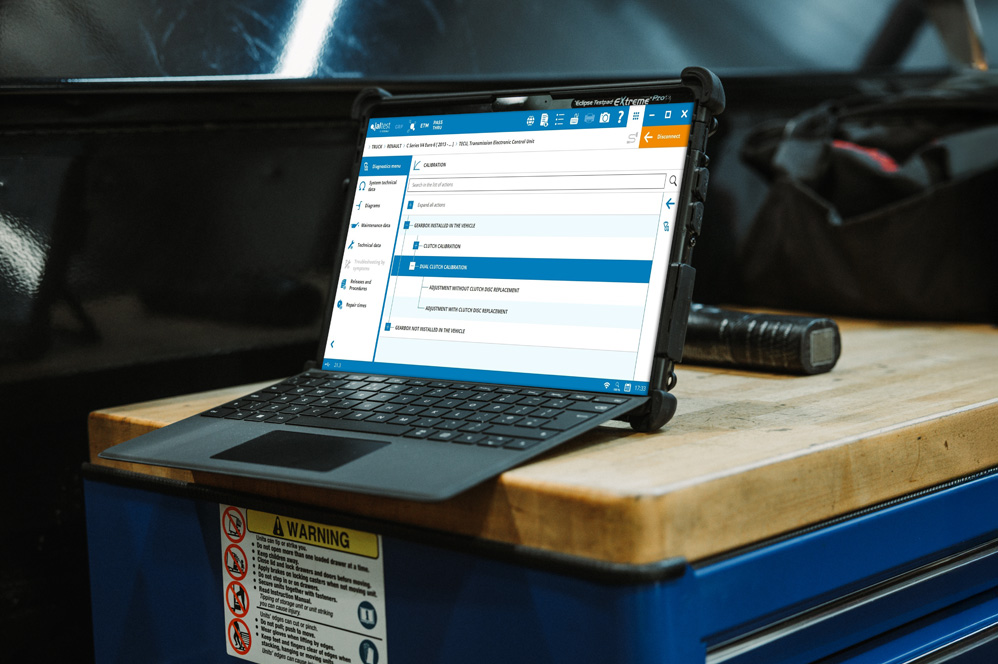
The single most impactful step a workshop can take to reduce misdiagnosis is investing in a diagnostic tool that provides genuine depth. Not just fault code reading, but full ECU access, live data, guided diagnostics, and activation testing across a broad range of commercial vehicle brands.
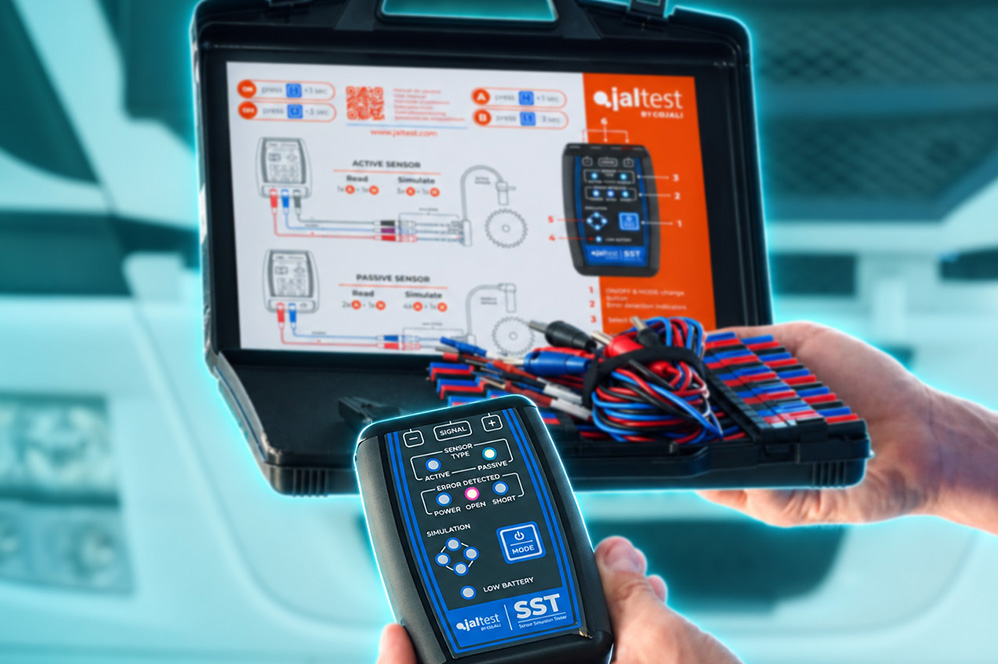
This is exactly what Jaltest diagnostics is built to deliver. Rather than presenting a code and leaving the technician to interpret it, Jaltest provides the context needed to reach an accurate diagnosis: what the code means on that specific vehicle, what live parameters should look like, what guided steps to follow, and what secondary faults may be influencing the reading.
For workshops running a mixed fleet of trucks, trailers, buses, coaches, and light commercial vehicles from multiple brands, this depth of coverage is particularly valuable. The ability to work with genuine OEM-level data across different makes significantly reduces the chance of a misstep caused by limited or inaccurate diagnostic information.
Eclipse also offers Jaltest Central Services, a remote ECU programming capability that gives independent workshops access to dealer-level functions directly through their Jaltest tool. For complex fault scenarios involving ECU configuration or parameter changes, this access can be the difference between a confident, complete repair and a job that needs to be referred elsewhere.
What a Good Diagnostic Process Looks Like
Beyond the tool itself, reducing misdiagnosis is also about process. The most effective workshops tend to follow a consistent diagnostic approach:
- Begin with a full system scan, not just the system flagged by the driver or the most obvious code
- Review all stored faults and note any that appear related, even on other ECUs
- Check live data to understand what the system is seeing in real time
- Use guided diagnostic procedures where available before replacing any component
- Confirm the repair by clearing codes, running the vehicle, and rescanning before releasing it
This kind of structured approach takes a little longer on each job. But it consistently produces better outcomes: fewer repeat visits, fewer unnecessary part replacements, and fewer customers who do not return.
The Bottom Line
Misdiagnosis is not a topic that gets talked about enough in the commercial vehicle industry. There is a natural reluctance to dwell on it, partly because it reflects badly on individual technicians and partly because workshop owners would rather focus on what they are doing well.
But the cost of getting it wrong is significant. Financially, reputationally, and legally. And much of it is avoidable.
Investing in the right diagnostic equipment, ensuring technicians are properly trained, and building a consistent diagnostic process are the three pillars of getting it right more often. If you would like to understand how Jaltest commercial vehicle diagnostics can help your workshop reduce diagnostic errors and improve first-time fix rates, get in touch with the Eclipse team today.
Ready to Upgrade Your Diagnostic Capability?
Speak to the Eclipse team about Jaltest diagnostics for commercial vehicles. Call us on 03454 666 699 or contact us online.