





A failed annual test rarely means just a failed test. It usually means a vehicle off the road, a rebooked slot, a technician doing the same job twice, and a fleet customer asking difficult questions about turnaround time. For workshops, getting it right first time isn’t just good practice. It’s what keeps bays moving and customers coming back.
Diagnostic tools play a growing role in making that happen. Rather than waiting for a DVSA examiner to flag a fault, workshops using multi-brand diagnostics like Jaltest can identify and fix many of the same issues days or weeks in advance, on their own schedule.
What Is the HGV Annual Test, and What Does It Actually Check?
For goods vehicles over 3.5 tonnes, the official name is the annual test rather than the MOT, though the two terms are widely used interchangeably across the industry. It’s carried out by the DVSA, usually at an Authorised Testing Facility, and covers a wide range of safety-critical systems, including:
- Brakes, including service and parking brake performance
- Steering and suspension
- Tyres and wheels
- Lighting and indicators
- Tachograph and speedometer function
- Emissions and, where fitted, AdBlue/SCR systems
- Chassis condition, body security and coupling equipment
- ADAS systems, on vehicles where they’re fitted
A vehicle only needs one defect in any of these areas to fail, which is why a structured pre-test check matters as much as the repair work itself.
Why Commercial Vehicles Fail Their Test
According to the DVSA’s own testing figures, the initial failure rate for HGV annual tests has consistently sat above 10% in recent years, with many of those vehicles requiring rework before they pass on retest. Brakes, tyres, suspension and lighting remain consistently among the most common defect categories flagged during inspections, alongside issues with body security and wheel arch condition.
The frustrating part for most workshops isn’t the big, obvious faults. It’s the smaller issues, an intermittent lighting circuit, a slow air leak in the suspension system, a brake imbalance that doesn’t show up on a visual check, that only become apparent once the vehicle is on the rollers in front of an examiner.
How Diagnostic Tools Catch Problems Before Test Day
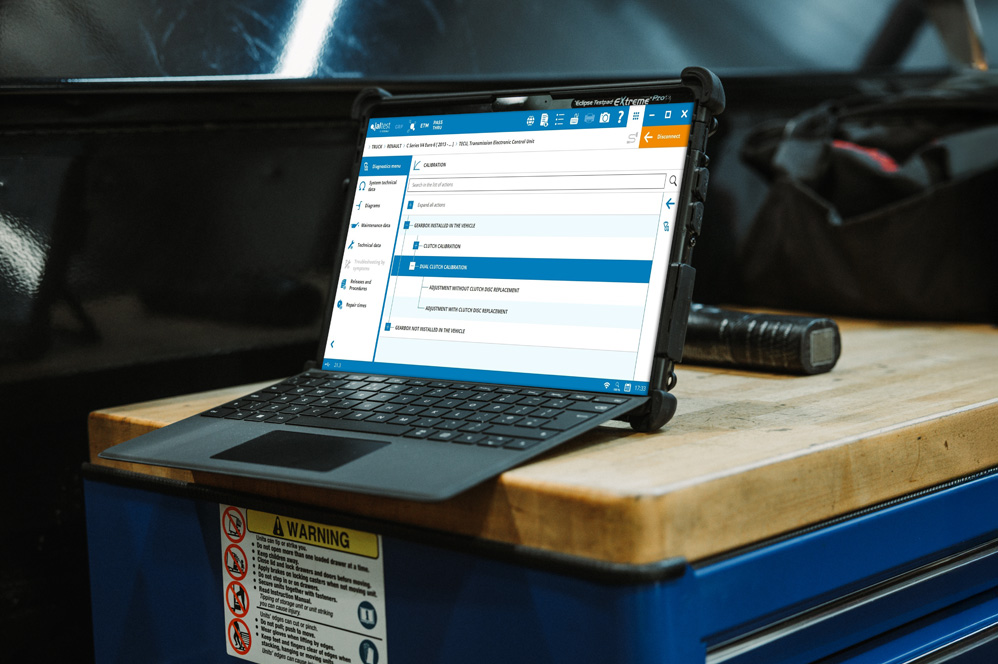
This is where a proper diagnostic scan earns its keep. A full system check with Jaltest before a vehicle goes for test can pick up on issues long before they turn into a failure on the day.
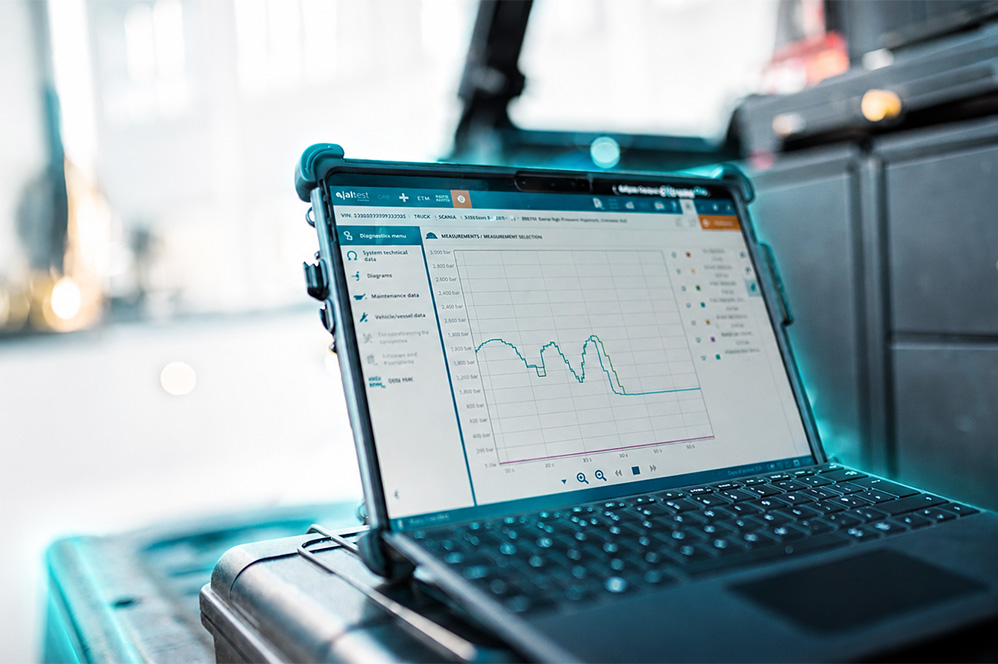
- Brake and ABS/EBS systems. Jaltest reads live data directly from the brake system’s ECUs, so technicians can check individual wheel sensor readings, valve operation and brake balance without waiting for a physical roller test to reveal a problem.
- Suspension and air systems. Fault codes and live data from the electronic suspension control unit can flag slow leaks, faulty height sensors or valve issues that would otherwise only show up as a slow air loss during the test itself.
- Lighting and wiring circuits. Rather than a straightforward bulb check, diagnostics can trace intermittent electrical faults back to their source using live data and interactive wiring diagrams, which is particularly useful on vehicles where a fault only appears under load or vibration.
- Tachograph and speedometer. A diagnostic check confirms the tachograph is communicating correctly with the vehicle’s other systems, helping catch calibration or signal issues before they’re picked up as a test defect.
- Emissions and AdBlue/SCR systems. Fault codes relating to SCR performance, NOx sensor readings and AdBlue quality can all be checked and, where appropriate, cleared following a genuine repair, rather than being left to surface on the emissions element of the test.
- ADAS systems. Where a vehicle has been repaired or had glass, suspension or steering work carried out, its ADAS sensors may need recalibrating to function correctly. We’ve covered this in more detail in our guide to ADAS calibration equipment.
Building Diagnostics into Your Pre-Test Routine
Workshops that consistently pass vehicles first time tend to treat diagnostics as a routine step rather than a last resort. A simple approach that works well for many:
- Run a full system scan a few days before the test date, not the morning of.
- Review all stored and pending fault codes, not just the ones triggering a warning light.
- Check live data on brake, suspension and lighting systems under real operating conditions where possible.
- Carry out any necessary repairs and clear codes properly, confirming the fix with a second scan.
- Keep a record of the pre-test check, which can also support your ongoing maintenance and roadworthiness documentation.
Getting this step right matters more than it might seem. As we explored in our article on the hidden cost of misdiagnosis in commercial workshops, a fault that’s missed or misdiagnosed doesn’t just risk a test failure. It risks a second visit, a second labour bill and a customer who starts looking elsewhere.
Reducing Repeat Failures and Retest Costs
Retests cost money and time that most workshops and fleet operators would rather not spend. Catching issues in advance through diagnostics reduces the chance of a retest, but it also has a knock-on benefit: vehicles spend less time off the road overall.
For workshops managing multiple vehicles or supporting fleet customers, Jaltest Telematics can extend this further, flagging developing issues remotely so a vehicle can be booked in for repair before a fault has the chance to affect its test outcome at all.
Getting the Right Tools for the Job
None of this works without the right equipment in the workshop. Jaltest CV covers trucks, trailers, buses, coaches and light commercial vehicles from a single multi-brand platform, so technicians aren’t switching between different dealer tools depending on what’s on the ramp. You can see the full range of coverage and functionality on our Jaltest CV product page.
For workshops running diagnostics as a core part of their daily routine, it’s also worth thinking about how that equipment is protected and organised day to day.
Our article on why the Eclipse Workstation is the missing piece in your diagnostic setup covers this in more detail.
Frequently Asked Questions
Can diagnostic tools guarantee a vehicle will pass its annual test? No single tool can guarantee a pass, since the test also covers visual and mechanical checks that fall outside diagnostics. What diagnostics can do is catch electronic and system faults early, so they’re fixed before test day rather than discovered during it.
How long before the test should a diagnostic check be carried out? Ideally a few days beforehand, rather than on the morning of the test. This leaves time to order parts, complete repairs properly and re-scan the vehicle to confirm the fix before it’s presented for test.
Do all HGVs need ADAS calibration before their annual test? Only where ADAS systems are fitted and where recent repair work, such as glass, suspension or steering work, may have affected sensor alignment. Not every vehicle will need it, but where it applies, it’s worth checking as part of the pre-test routine.
Want to see how Jaltest could fit into your workshop’s pre-test routine? Get in touch with the Eclipse team to talk through your setup.