





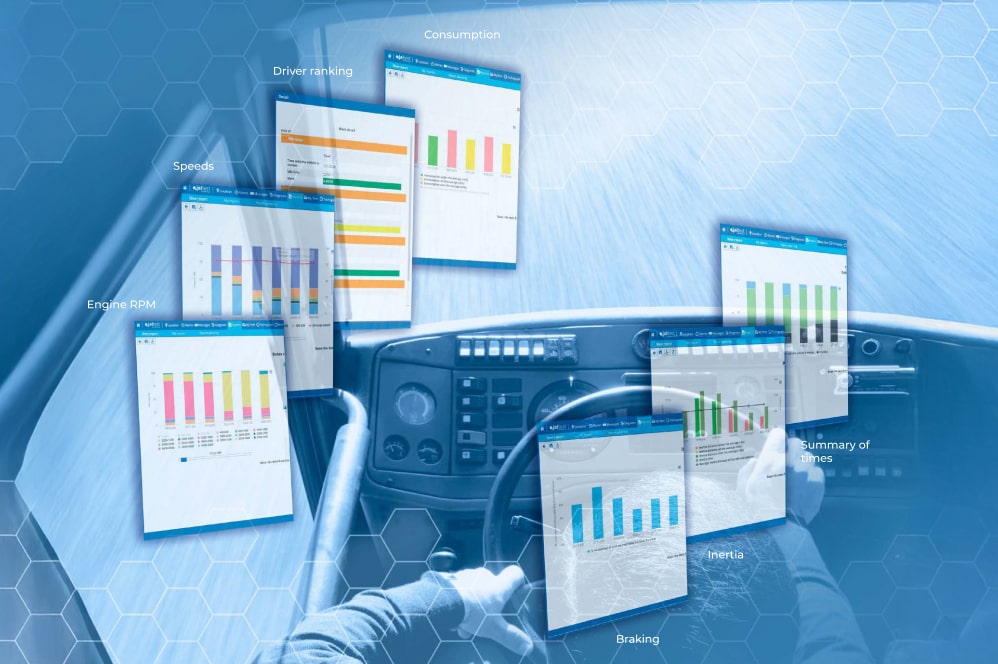
 Running a fleet is all about keeping costs down and performance up — and sometimes, the smallest details can make the biggest difference. One of those details is engine idling — when a vehicle’s engine is running but it’s not actually going anywhere. It might not seem like a big deal, but over time, excessive idling can waste fuel, add wear to key components, and increase emissions.
The good news? With smart tools like Jaltest Telematics, you can monitor idle time, understand why it’s happening, and take practical steps to improve efficiency across your fleet.
Why Engine Idling Matters
While idling may seem innocuous, its cumulative effect can be significant for a fleet:
Fuel consumption: Even when not moving, engines burn fuel. Depending on engine size and load, idling for 1 hour can consume several litres of diesel. Multiply that across dozens of vehicles, and the cost adds up.
Component wear and tear: Idling still stresses engine systems — oil circulation, cooling, turbochargers (if present) and exhaust aftertreatment systems like DPF and EGR are all active even when stationary. Over long periods, that can accelerate wear, clog filters, or disturb calibrations.
Emissions & regulation risk: In some urban zones or environmental schemes, excessive idling may breach local emissions or air quality rules. Being able to show and reduce idling helps with regulatory compliance and green credentials.
Operational inefficiency: Long idle periods might hide inefficiencies in logistics, driver behaviour or job scheduling. If vehicles wait too long at customer sites or queuing, that’s unproductive time.
Because idling is subtle and usually unmonitored, many fleet operators don’t even realise how much potential is being lost.
How Jaltest Helps Monitor and Manage Idling
Jaltest Telematics is well suited to capture and act on idling data:
- Live data and status logs – Jaltest can record engine status (on/off), RPM, vehicle speed, and other parameters over time. By analysing those logs, you can spot when the engine is running but the vehicle isn’t moving.
- Time-based thresholds & alerts – Use the system to flag periods where idle time exceeds a threshold — say 5 or 10 minutes. Alerting the operator or fleet manager to habitual idling can drive behaviour change.
- Benchmarking & comparison – Compare average idling across vehicles, routes, drivers or days of the week. Which vehicles or drivers idle the most? Which jobs tend to cause long waits? Having that insight helps target improvements.
- Maintenance linkage – Correlate high-idle vehicles with higher consumables usage (e.g. oil, filters) or more frequent aftertreatment interventions. If you see a pattern, you can pre-emptively schedule service before failures emerge.
- Driver coaching & feedback loop – Present idle time reports to drivers (e.g. weekly summaries). Use it in training or driver incentive programmes — encourage turning engines off when safe to do so.
- Route / scheduling optimisation – If idling tends to cluster in certain types of jobs (e.g. congested delivery zones, waiting at depots), revisit your scheduling, loading patterns or site processes to reduce waiting time.
In short: Jaltest Telematics gives you the “why” behind idle behaviour, not just raw numbers.
Best Practices to Reduce Unnecessary Idling
To turn insight into action, here are practical strategies:
- Enforce shut-off policies: For example, mandate engine shut down after a set idle duration (e.g. 2–3 minutes) unless required for specific functions (e.g. climate control, refrigeration).
- Use auto start/stop (if available): Many modern vehicles include auto start/stop systems. Ensuring they are functioning and not disabled is crucial.
- Plan arrival times: Avoid early arrivals where drivers wait with the engine on. Coordinate tighter windows with clients.
- Idle-free waiting enclaves: Where safety and regulations permit, drivers can wait in allocated zones with engine off rather than queuing with engine running.
- Driver training & awareness campaigns: Educate drivers on the cost of idling (fuel, wear, emissions). Use real data from Jaltest reports to illustrate impact.
- Incentivise behaviour change: Recognise drivers or routes that consistently keep idling low. Reward improvements.
- Match maintenance intervals: Use idle data to predict consumable depletion (filters, oil) and adjust maintenance schedules accordingly.
Example: Quantifying the Impact
 Let’s say a medium-duty truck has an idle consumption of 4 litres per hour (a conservative estimate). If that truck idles 30 minutes daily, that’s 2 litres lost each day. Over 22 working days, that’s 44 litres. At, say, £1.40/L diesel, that’s ~£61.60 per month per vehicle. Across just 10 vehicles, that’s over £600 per month wasted — and that’s before factoring additional maintenance or emissions costs.
Now imagine reducing idling by 50 %. That’s more than £300/month saved per 10-vehicle mini-fleet, likely paying back any implementation costs quickly.
Click here to learn about our Truck Diagnostics software.
Challenges and Considerations
- Safety / regulatory constraints: In cold climates or for cab comfort (heating/cooling), shutting off the engine may not always be feasible. Some idling is inevitable.
- Battery load & cycles: Frequent stops and starts stress starter motors and batteries. Any policy must check that vehicle systems can handle increased cycles.
- Data noise / anomalies: Sometimes data may misclassify short stops as idling, or GPS signal dropouts can distort logs. Validate with spot checks or driver feedback.
- Driver acceptance: Shutting down the engine in the middle of jobs can feel inconvenient to drivers. Loop them in, explain the benefits, and get buy-in.
Conclusion: Idle Less, Insight More
Engine idling may seem like a small, hidden detail in fleet operations — but thanks to modern diagnostics, it becomes an actionable KPI. With Jaltest’s capacity to monitor engine usage, correlate maintenance and driver behaviour, and generate reports, idle time transitions from an unseen cost to a targetable metric.
By combining that insight with strong operational policies, driver engagement, and route planning, fleets can convert idling waste into efficiency gains, lower emissions, and healthier bottom lines.
If you’d like to explore how to set up Idle Time monitoring via Jaltest Telematics or tailor reports for your fleet, our team is always ready to help.