





If you’ve ever spent a frustrating afternoon chasing an ABS or EBS fault that just won’t reveal itself, you’ll know how quickly that kind of job can eat through your day. Speed sensor issues on trucks and trailers are one of those faults that look simple on paper but can be surprisingly difficult to pin down without the right equipment.
The good news is that there’s a tool designed specifically to solve this problem, and it’s part of the Jaltest Tools range available from Eclipse right here in the UK. It’s called the Jaltest SST (Speed Sensor Tester), and once you’ve used it, it’s hard to imagine going back to doing things the hard way.
What Does the Jaltest SST Actually Do?
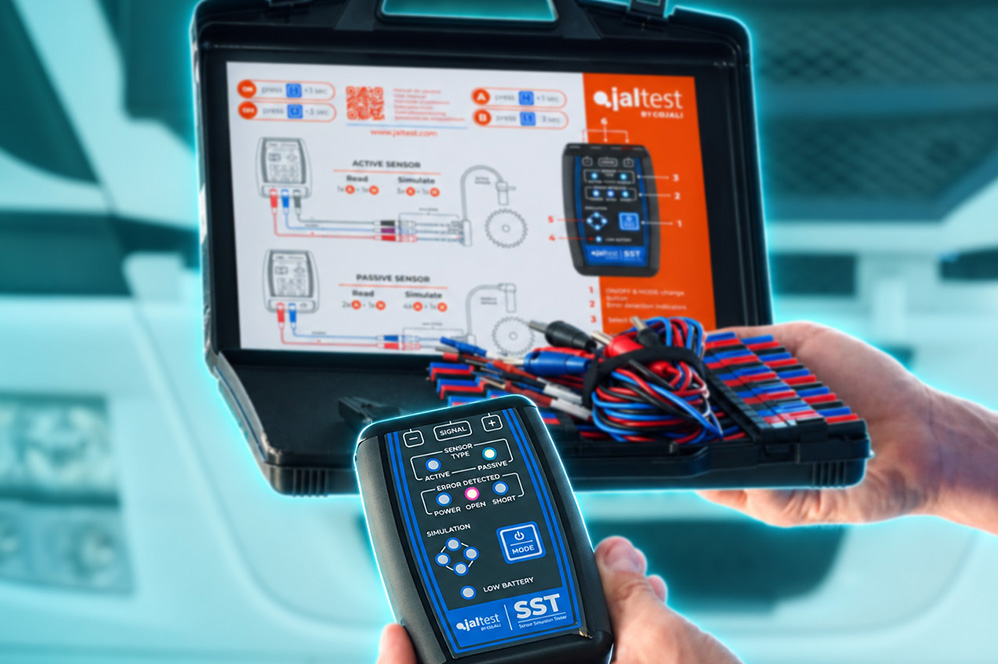
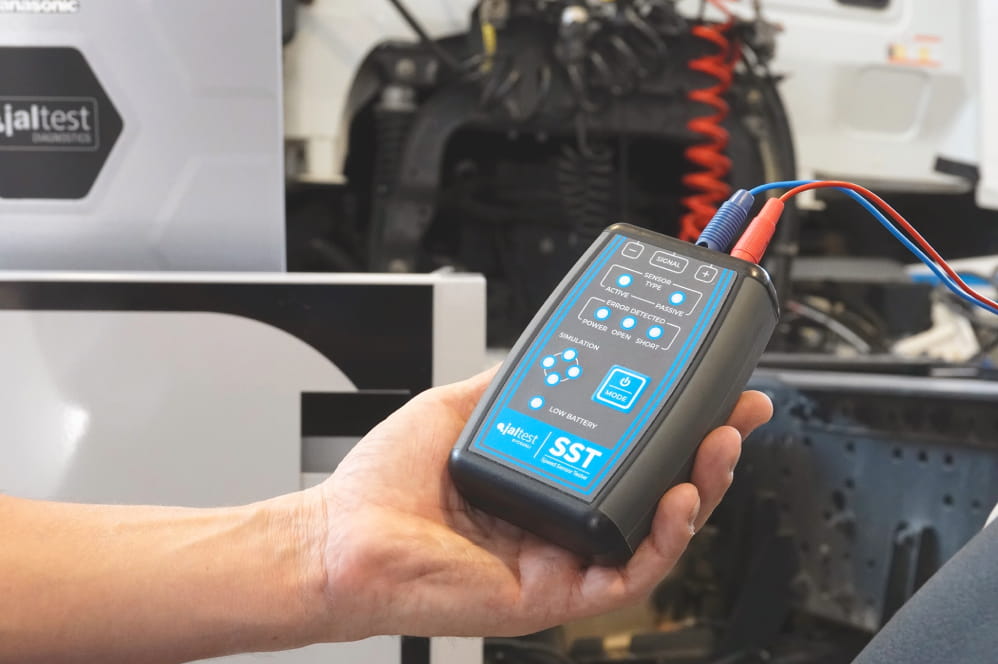
At its core, the SST is a handheld testing device built to check the condition and output of speed sensors — both passive (inductive) and active (Hall effect) types. Speed sensors are the components responsible for feeding wheel speed data to your ABS and EBS control modules, and when they go wrong, the knock-on effects can range from a warning light on the dash to full brake system intervention kicking in unexpectedly.
The trouble with speed sensor faults is that there are several things that could be causing the problem. Is it the sensor itself that’s failed? Is it the wiring between the sensor and the ECU? Or is the control unit failing to process the signal correctly? Without a dedicated tester, working out which of those three possibilities is actually at fault means a lot of manual probing, testing, and educated guesswork.
The Jaltest SST cuts through all of that. Here’s how.
Reading Live Sensor Output
The SST connects directly to the speed sensor and reads its output in real time. You can immediately see whether the sensor is generating a signal at all, and whether that signal is within the expected parameters. A passive sensor should produce an AC voltage that increases as the reluctor ring spins faster; an active sensor outputs a digital square wave signal. The Jaltest Speed Sensor Tester can read both.
This alone saves a significant amount of time. Rather than removing a wheel, jacking up an axle and spinning it to get a reading with a multimeter, you can connect the SST and know within seconds whether the sensor is doing its job.
Simulating Sensor Signals
Here’s where the SST really earns its place in the toolkit. It doesn’t just read signals — it can also generate and output simulated sensor signals directly into the wiring circuit.
Why does that matter? Because it lets you test the rest of the system independently of the sensor itself. If you suspect the fault lies not with the sensor but with the ABS or EBS module’s ability to receive and process the signal, you can use the SST to feed a known-good simulated signal into the circuit and observe how the control unit responds.
If the module behaves correctly when the Jaltest Speed Sensor Tester is simulating the signal, but doesn’t when the real sensor is connected, you’ve just confirmed the sensor is the problem — not the ECU. And conversely, if the module still behaves incorrectly even with a clean simulated signal coming in, your attention shifts to the wiring or the module itself.
This kind of targeted, logic-driven diagnosis is exactly what modern workshops need. It replaces a lot of the time-consuming multi-step testing that used to be the only option, and it significantly reduces the risk of replacing parts unnecessarily.
Covers Both Passive and Active Sensors
It’s worth highlighting that the SST handles both passive (inductive) and active (Hall effect) speed sensors — which matters because commercial vehicles use both, often within the same fleet. Passive sensors are found on older vehicles and trailers; active sensors are standard on modern trucks and buses. Having a single tool that works across both types means you’re not carrying multiple testers or hunting for workarounds.
This is typical of the Jaltest approach: build tools for how commercial vehicle workshops actually operate, not how they operated ten years ago.
Fast, Clear Results — Even in a Busy Workshop
The Speed Sensor Tester is designed to be quick and straightforward to use. It gives you clear, readable output that makes the diagnostic decision obvious. You don’t need to be highly technically minded to interpret the results — the tool does the hard work, and you get a clear steer on what’s causing the fault and where to look next.
It’s portable too, which matters when you’re crawling around under a trailer or working in a bay that isn’t close to your main diagnostic workstation. The SST is the kind of tool you can drop in a pocket or a kit bag and take to the vehicle, rather than bringing the vehicle to the tool.
How It Fits With the Rest of Your Jaltest Setup
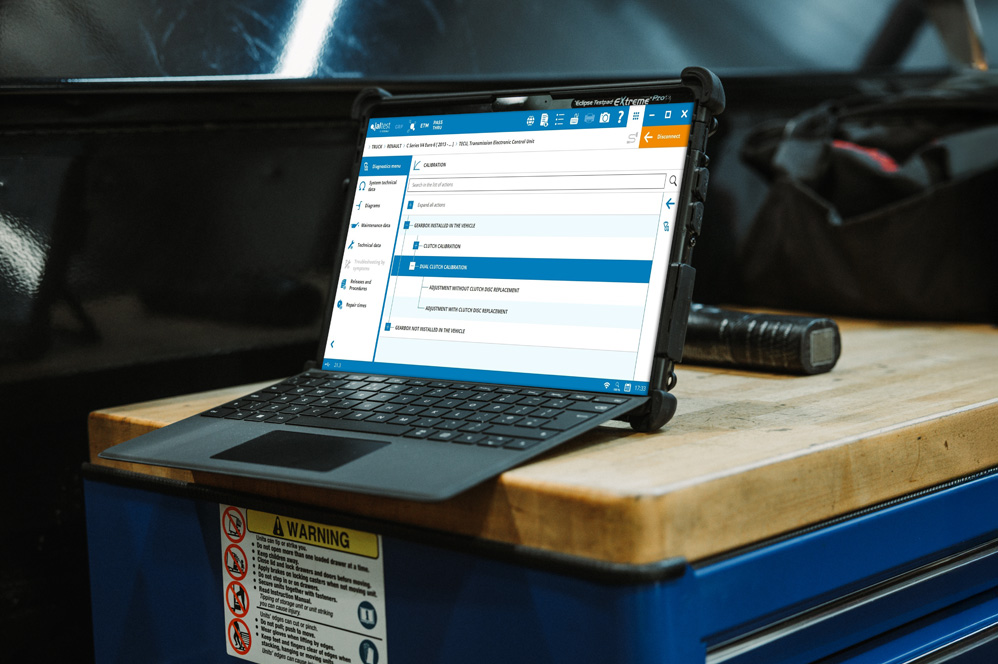
If your workshop is already running Jaltest CV for truck and trailer diagnostics, the SST slots in naturally as a complementary piece of equipment. The Jaltest diagnostics software will flag ABS and EBS faults and point you in the direction of the relevant sensor or module — and the SST then gives you the means to confirm exactly what’s going on at the component level.
Think of it as working in two stages: the Jaltest diagnostic system identifies the system and the fault code; the SST lets you get hands-on and verify the root cause quickly. Together, they give you a complete picture without the guesswork.
It’s also worth knowing that the SST works alongside the Jaltest ETM (Electronic Test Module) if you’re dealing with faults that go deeper into the ABS or EBS module itself. The ETM is designed to test EBS brake modules from Wabco and Knorr-Bremse — another targeted tool that, like the SST, is built to give you fast answers on specific components rather than broad fault code sweeps.
Who Is the Jaltest SST For?
The SST is a particularly good fit for:
- Independent truck and trailer workshops that deal with a mix of makes and need a reliable way to diagnose ABS and EBS sensor faults across brands without relying on dealer tools.
- Fleet maintenance operations where speed of diagnosis directly affects vehicle off-road time. Being able to rule in or out a sensor fault in minutes rather than hours has a direct impact on daily operations.
- Roadside breakdown technicians who need a compact, portable tool that gives them fast answers out in the field — especially when a trailer has come in with an ABS warning and the driver needs to be back on the road as quickly as possible.
- Workshops that already use the Jaltest WST (Wear Sensor Tester) for brake pad wear sensor checking — the SST is a natural companion tool that covers the speed sensor side of the same braking system.
BUY YOURS TODAY!
The Jaltest SST is available from Eclipse for £279.00 ex VAT, making it one of the most cost-effective specialist tools in the Jaltest range. For context, a single unnecessary ABS module replacement on a truck — the kind of mistake that can happen when you’re diagnosing without the right tools — could easily cost several times that amount. The SST pays for itself quickly.
Orders placed before 1pm are dispatched for next-working-day delivery, so you won’t be waiting long to get it into your hands.
A Practical Tool for a Common Problem
Speed sensor faults aren’t rare in commercial vehicle workshops — they’re an everyday occurrence, particularly on older trailers and heavily used trucks. The Jaltest SST doesn’t promise to do everything; it does one specific job, and it does it very well.
That focus is what makes it valuable. It’s not a replacement for your main diagnostic tool — it’s the thing you reach for when the diagnostic tool has pointed you at a speed sensor and you need to know definitively what’s happening at that component.
If ABS and EBS sensor diagnostics are a regular part of your workshop’s workload (and for most commercial vehicle workshops, they absolutely are), this is a tool worth having.
You can browse the full Jaltest SST product page for full technical details, or take a look at the wider Jaltest Tools range if you’re looking to build out your workshop’s diagnostic capability more broadly.
And as always, if you’d like to talk through which tools are right for your setup, the Eclipse team are happy to help — just get in touch.